

I Am Still Here
Surviving Something That Tried To Kill You

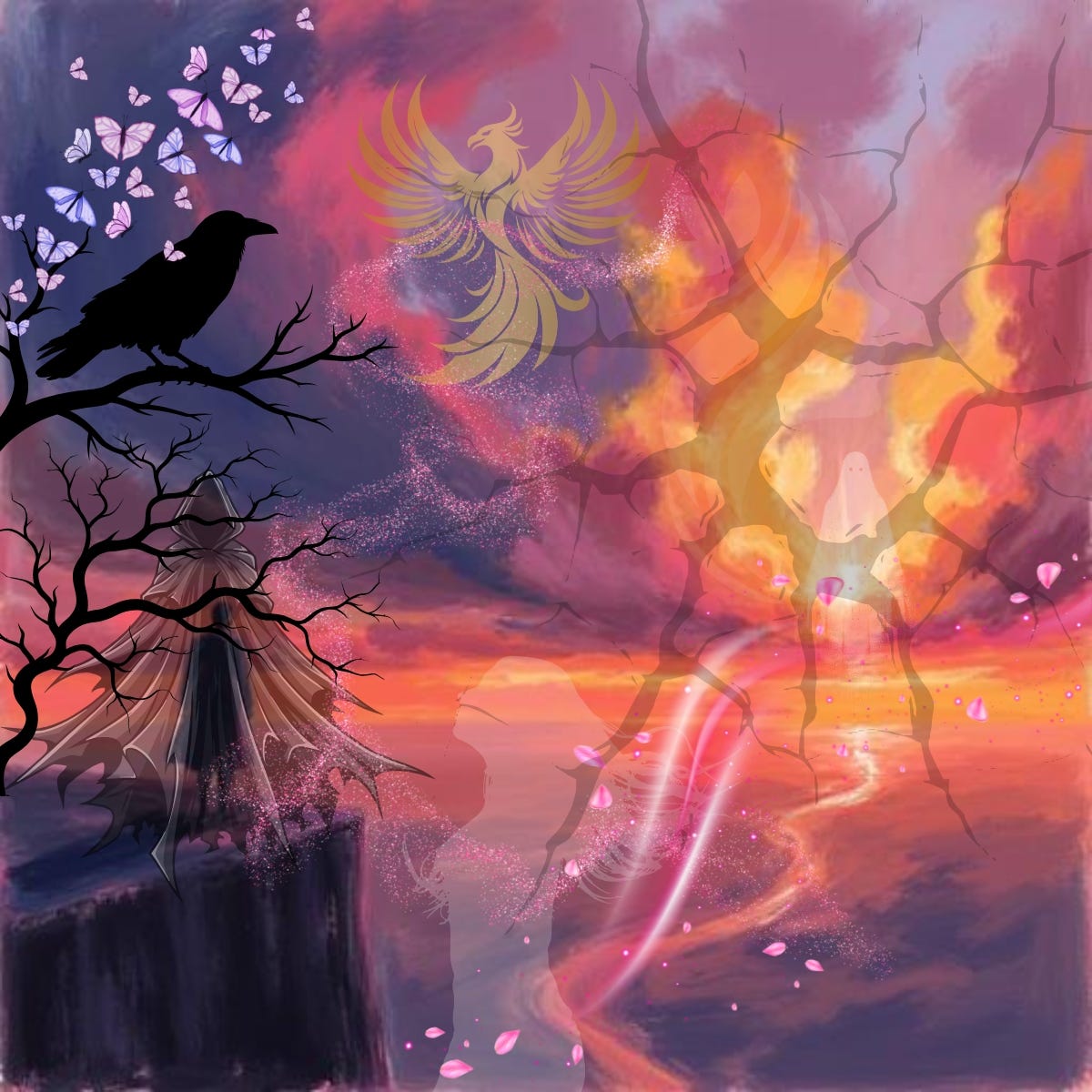
There is a strange kind of loneliness that comes after surviving something that almost erased you.
People call it a miracle…they say you are luckyt…they tell you how well you are doing, how strong you are, how brave you must be…they mean it kindly, and part of you knows they are right….you are still here. I just wrote a song about that. The kettle still boils..the cat still wants feeding, with the same imperious disregard for your near-death experience. The washing still somehow multiplies when nobody is looking, apparently unbothered by mortality.
Life goes on…it never even asked permission.
But underneath all the relief and gratitde, there is another truth. A quieter one…a more difficult one.
Surviving something like a stroke does not simply return you to life. It wakes you up inside it.
Before something breaks, we tend to walk around with the comforting illusion that we are solid. We think we are our personality, our opinions, our routines, our memories, our clever little internal monologue that never seems to shut up, even at three in the morning, even when there is genuinely nothing to say. We think we are the person who likes this music..hates that smell..always sits in the same chair..tells the same stories..holds the same grudges..and has very firm views on how tea should be made.
Then something happens.
The body misfires…the brain stutters…the words disappear…the hand will not move. The familiar pathways suddenly become overgrown, as if someone has taken your internal map and dropped it in a puddle, then left it out in the rain for good measure.
And then you discover something rather inconvenient.
You are not as fixed as you thought you were.
This can be terrifying at first. The mind, bless its dramatic little socks, does not enjoy being shown that it is not the supreme ruler of the universe. It likes to sit on its throne, wearing a paper crown, announcing, ‘This is who we are now, and I have the paperwork to prove it.’
But after a stroke, or any life-altering crisis, the paperwork goes everywhere. It’s less a filing system and more a filing cabinet that has fallen down a flight of stairs.
The identity you thought was permanent starts to come apart. Not gently, either. More like an overstuffed cupboard opening at the wrong moment. Out fall old roles, old fears, old ambitions, old masks, old stories you had been carrying for years without ever checking whether they still belonged to you, like a coat you kept because it used to fit.
The reliable one…the capable one…the clever one…the strong one…the one who copes…the one who never asks for help…the one who keeps going even when held together by caffeine, stubbornness, and whatever crumbs of dignity remain in the biscuit tin.
A crisis strips these things away.
Not because they were all false, but because they were not the whole truth.
Recovery is often spoken about as a heroic journey. There is truth in that. Every regained word matters. Every step matters. Every moment where the body does what you asked it to do deserves a small brass band and possibly cake. Ideally cake first, band later, once you’ve had a sit down.
But recovery is also grief.
It is grieving the certainty you used to have. It is grieving the body you trusted without thinking. It is grieving the old confidence that tomorrow would probably look much like today. It is grieving the version of yourself who did not yet know how fragile everything was.
That grief is not weakness. It is honesty.
There is a moment after survival when you realise that the life you were living before was built on assumptions. We all do it…we assume there will be more time…we assume we will always be able to speak, walk, remember, decide, plan, and explain ourselves. We assume the person in the mirror will remain broadly recognisable, and that it will keep turning up to meetings on time.
Then the illusion cracks.
And through that crack, something deeper begins to show.
At first, it can feel like loss. The mind panics because it cannot find the old labels. It asks, “Who am I if I cannot do what I used to do? Who am I if I cannot think the way I used to think? Who am I if my body has become unfamiliar territory?”
These are not small questions. These are not questions you answer with a motivational quote over a picture of a sunset. Although, to be fair, sunsets do pull their weight.
These are the questions that take you beneath identity.
Because if you are not your job, your memory, your speed, your productivity, your sharpness, your role in other people’s lives, your old routines, your past stories, or the opinionated committee inside your head — the one that has never once taken a vote and yet somehow always gets its way — then what are you?
This is where the harsh reality begins to soften into something sacred.
Because beneath all of it, something remains.
There is still an awareness watching. There is still a quiet presence underneath the noise. There is still a core of being that is not made out of labels, achievements, trauma, fear, performance, or personality.
It does not shout. It does not need to introduce itself at parties. It does not have a five-year plan or a branding strategy. It simply is. Refreshingly low-maintenance, as these things go.
That deeper self is not the version of you that the world claps for. It is not the polished social self, the productive self, the pleasing self, the useful self, or the one who knows exactly what to say. It is the self beneath all of that.
The self that exists before the mind starts narrating. The self that is still there when the body falters. The self that does not need to be impressive to be real.
A stroke can feel like a thief. It can take confidence, ease, speed, trust, language, movement, sleep, and the casual arrogance of assuming the body will simply keep up, no questions asked, like a slightly overworked but reliably loyal employee.
But it can also be a strange and brutal initiator.
It takes away the shallow certainties. It strips back the decorations. It shows you the costumes you were wearing without realising they had become tight around the soul, the way a favourite jumper quietly stops fitting and nobody tells you.
Some of those costumes once helped you survive. The strong one. The funny one. The fixer. The helper. The rebel. The mystic. The worker. The parent. The partner. The performer. The one who makes light of everything because crying in public is inconvenient and tends to make your nose run, right at the worst possible moment.
But after survival, you begin to ask a different question.
Not, “How do I get back to who I was?”
But, “What was never truly mine to carry in the first place?”
That is where the journey changes.
You begin to put things down.
Other people’s expectations. Old identities that no longer fit. The need to prove your worth through exhaustion. The belief that usefulness equals value. The idea that fear means failure. The fantasy that control was ever really the point.
This does not happen all at once. It is not a dramatic cinematic moment with orchestral music and perfect lighting. It is usually messier. It happens while making tea. While staring at a wall. While forgetting a word and watching your own face in the mirror wait patiently for it to arrive. While laughing at something ridiculous. While crying because your brain has had enough and has put itself into airplane mode.
Slowly, you begin to realise that you are not rebuilding the old self. You are uncovering the deeper one. The one that was always there, underneath the noise.
This is not the same as becoming fearless. Anyone who says survival makes you fearless is probably selling something, and it is probably available in three easy payments.
Survival does not remove fear….it changes your relationship with it.
Fear may still appear in the body. A headache can still feel suspicious. Dizziness can still send a cold little message through the nervous system. A forgotten word can still make the mind whisper, “Here we go again,” in the tone of someone who has never once been wrong.
But fear is no longer the whole room.
It is a visitor. An intense one, yes. The sort who arrives uninvited, touches all your ornaments, and asks personal questions before you’ve even offered them a seat. But still only a visitor.
The deeper self learns to sit beneath it.
Not above it. Not pretending to be spiritual and floaty while secretly panicking in the biscuit aisle. Beneath it. Rooted. Watching. Breathing. Present.
And presence becomes the real gift.
Not the fake kind of gratitude that gets printed on mugs. Real gratitude. The kind that appears when you understand that ordinary life is not ordinary at all.
Morning coffee becomes holy. Sunlight on the wall becomes enough. A familiar voice matters more. The cat being annoying becomes weirdly precious. A quiet day becomes a blessing instead of a failure. Rest stops feeling like laziness and starts looking suspiciously like wisdom.
You stop measuring life only by what you can produce.
You begin to measure it by how deeply you can inhabit it.
This is not always comfortable. The mind likes goals, labels, progress charts, and evidence that we are doing life correctly. The deeper self is far less interested in all that. It is not lazy. It is simply not fooled.
It knows that a life is not made meaningful because it is impressive.
It is made meaningful because it is lived.
Fully. Honestly. Tenderly. With open eyes, even when those eyes have seen too much.
Perhaps that is the strange teaching hidden inside survival. Life was never safe in the way we wanted it to be. It was never guaranteed. It was never under our full control, whatever the diary app might imply. We were simply very good at forgetting.
A crisis stops us forgetting.
At first, that feels cruel.
Later, it may become a doorway.
Not into a perfect life. Not into constant peace. Not into some glossy rebirth where you wear linen, drink herbal tea, and never swear at technology again. Let’s not get carried away.
But into a truer life.
A life where you stop confusing identity with being. A life where you stop treating the mind as the whole of you. A life where you become less interested in performing yourself and more interested in meeting yourself.
The self beneath the story…the self beneath the fear…the self beneath the roles…the self beneath the damage…the self that remains.
Surviving something that almost erased you does not always feel like a miracle in the tidy way people imagine. Sometimes it feels lonely. Sometimes it feels frightening. Sometimes it feels like standing in the ruins of who you were, holding a cup of tea, wondering where on earth to start.
Start there.
With the tea..with the breath…with the ordinary moment that is not ordinary at all. Because perhaps the deepest recovery is not becoming who you were before. Perhaps the deepest recovery is discovering who was underneath all along.
Yeah.. I know